Nuffield Health and Careology extend partnership as patient insight transforms cancer care
London, UK, 3rd November, 2026: Nuffield Health and Careology have renewed their partnership for a further three years, building on a successful collaboration that is using digital innovation to support better communication between patients and clinical teams, and providing valuable data to improve care.
Since Careology was first piloted at Nuffield Health Derby Hospital, the partnership has expanded across Nuffield Health's oncology network of ten hospitals offering systemic anti-cancer therapy (SACT) services, supporting patients undergoing cancer treatment with digital tools that enable them to stay connected with their healthcare team from home.
Many cancer patients experience changes in their symptoms and treatment side effects between appointments. While patients are advised on what symptoms to look out for, many can be hesitant to contact their clinical team because they are unsure whether their symptoms are significant enough, meaning concerns can go unreported and opportunities for early intervention may be missed. Equally, clinicians frequently rely on patients recalling symptoms and events from previous treatment cycles during relatively short consultations, making it difficult to build a complete picture of a patient's experience outside the hospital.
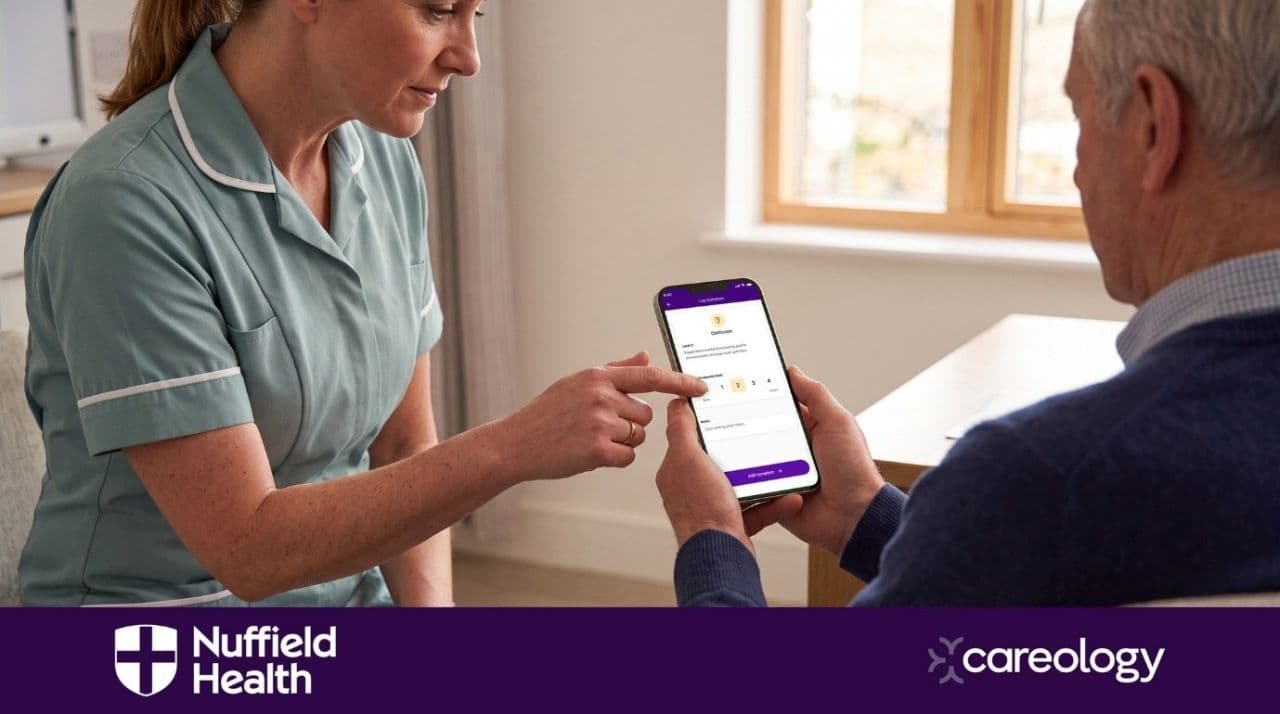
Through Careology, patients can log symptoms, monitor side effects and track medications from home, with information shared directly with their clinical team. This provides greater visibility of patients' wellbeing between appointments, prompting patients to contact their clinical team when needed, and enabling clinicians to identify concerning symptoms earlier and intervene more quickly when support or treatment adjustments may be needed.
Patient engagement with Careology has continued to grow across Nuffield Health, with engagement rates increasing by 22% compared with 2025 to reach 95% in 2026, helping clinical teams gain greater visibility of patient experiences between appointments.
Julie Little, Clinical Head of Nursing Oncology at Nuffield Health Derby Hospital, said:
"Keeping patients safe is the most important thing we do. Often, patients tell us they only contacted the team because Careology prompted them to, believing their symptoms were nothing to worry about. In reality, some required urgent clinical support. By helping us identify issues sooner, the app has enabled us to step in quickly and prevent patients from becoming seriously unwell."
The partnership has also been critical in identifying trends across patient groups, identifying concerns and allowing the team to change aspects of the care provided to all patients. Research from the partnership, presented at the International Society of Oncology Pharmacy Practitioners (ISOPP) Congress, demonstrated how symptom information reported through Careology helped identify higher rates of treatment-related mouth toxicity among certain patient groups. The insight resulted in a change to prescribing prophylactic pathways, with preventative mouthwash now incorporated for patients receiving specific chemotherapy regimens across Nuffield Health hospitals.
Elisa Mills, Cancer Services National Lead at Nuffield Health, said:
"At Nuffield Health, we are always looking for new ways we can improve the experience and outcomes of our cancer patients. Working with Careology has not only directly supported individual patient care, it has provided us with the tools and insights to identify trends, enabling us to make changes that improve care for future patients. The findings presented at ISOPP show how powerful the information patients share with us can be."
Paul Landau, Founder and CEO of Careology, said:
“Patients are the only people who see the whole of their cancer treatment, not just the moments they spend in clinic. For too long, what they experienced at home went unrecorded. We built Careology to change that: to give patients a simple way to report how they’re feeling, and to give clinical teams the information to act on it. Nuffield Health has shown what’s possible when that information is put to work. Individual patients get help sooner, and the data changes how care is delivered for everyone. That’s the shift we want to see across cancer care, and this partnership is proof it works.”